

✈️ The contrail avoidance playbook for airlines is out
Plus a new contrails tool, a new funding opportunity, and


Today, Blue Lines releases Contrail Avoidance in Practice: A Playbook for Airlines — a free guide to implementing contrail avoidance trials at an airline.
Contrail warming is one of aviation’s largest climate problems and one of the most addressable. But for airlines interested in mitigating contrail warming, it can be overwhelming to figure out the Who, What, Where, When, Why & How of contrail avoidance.
What has been missing is a clear, practical starting point for the people inside airlines who need to make it happen. The playbook is based on interviews with early-adopter airline sustainability leads, dispatchers, pilots, and consultants, who share their knowledge and experience with implementing contrail avoidance in trials.
Here is some of what the playbook covers:
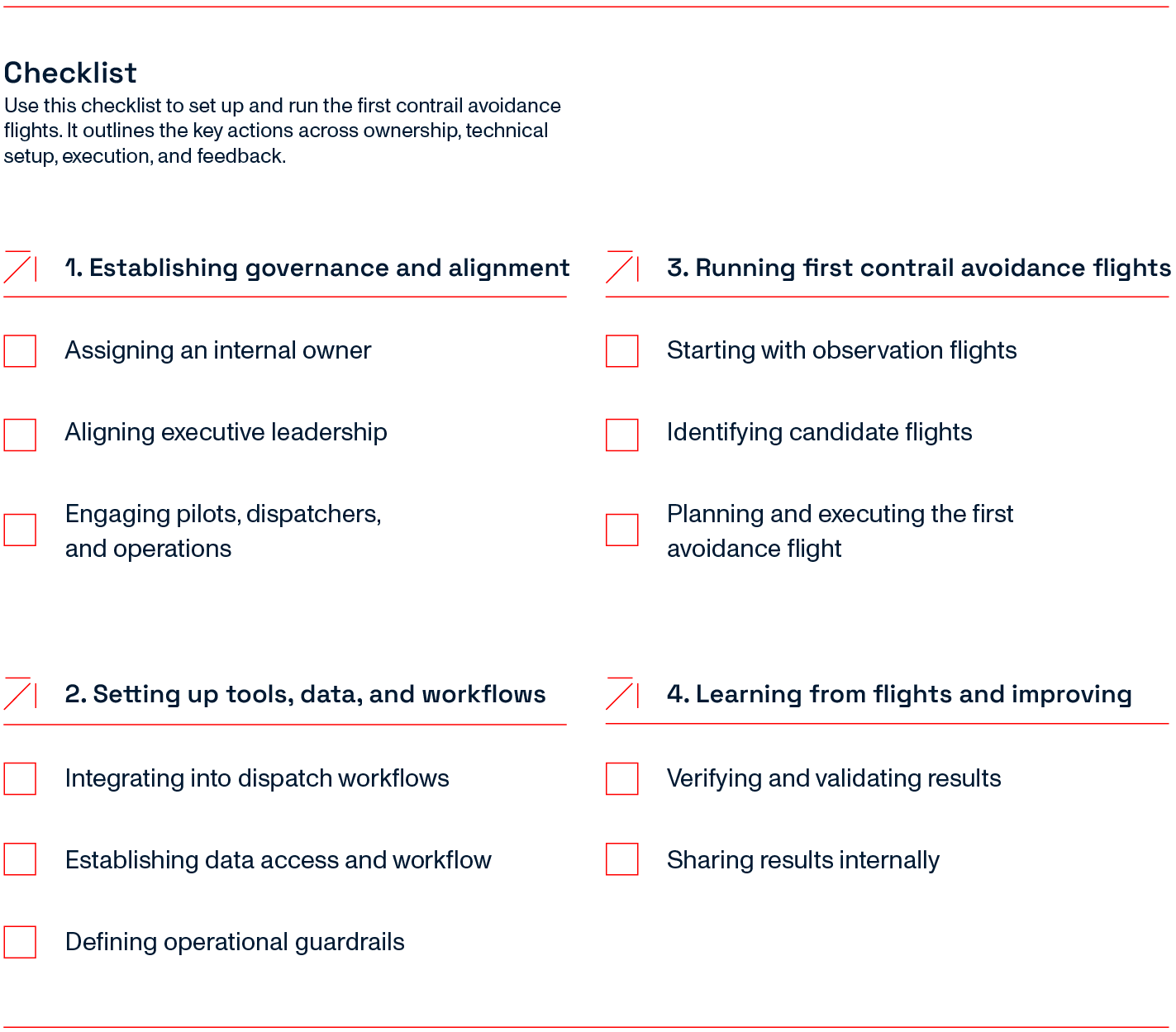
A readiness checklist. What needs to be in place before an airline can run a contrail avoidance trial: data access, software integration, flight operations, crew briefings, and internal stakeholder alignment
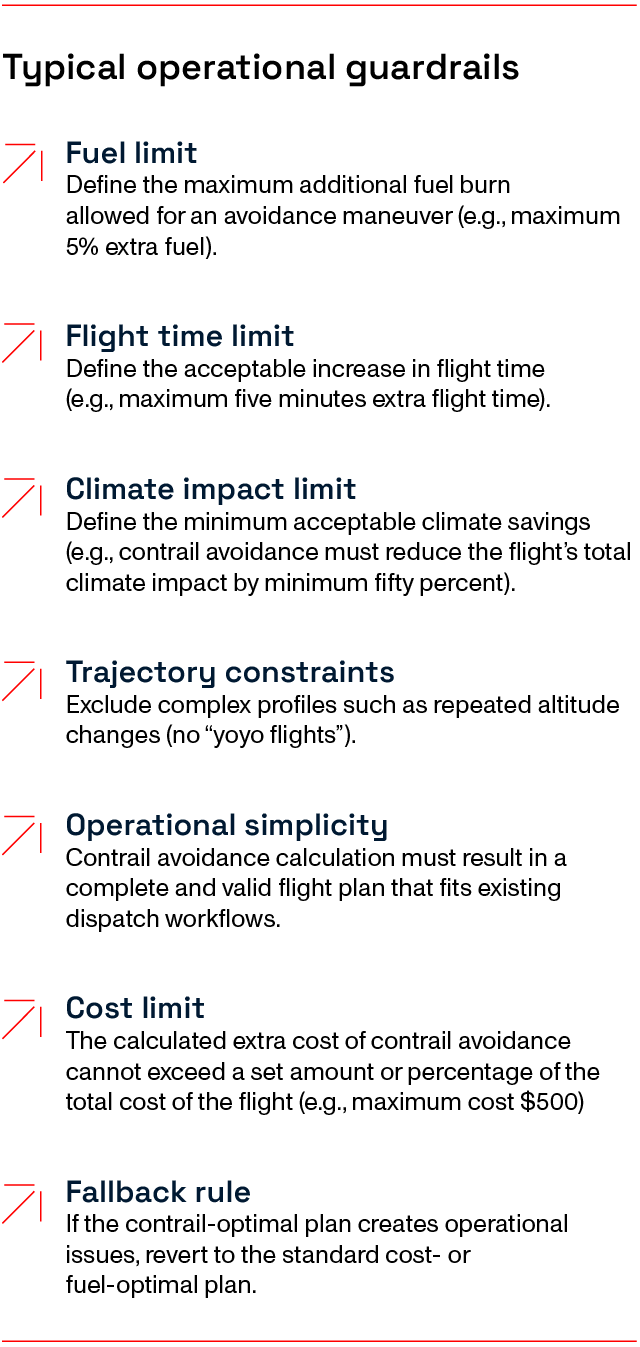
Cost and risk management. The extra fuel burn required for contrail avoidance is small but real. The playbook walks through how early movers have handled the business case, what the actual cost exposure looks like, and how to manage it operationally.
First-mover advantage. EU non-CO₂ monitoring and reporting is already in force. Pricing of non-CO₂ warming effects may follow in 2027. Airlines that have run trials are better positioned to influence policymaking and be ready when incentives are introduced.
A six-phase rollout. Based on how airlines have actually done this, from initial data assessment through to a live operation, including the decisions, the stumbling blocks, and what to do when the forecast is uncertain.
The playbook is created with the support of Contrails.org and was reviewed by the International Council on Clean Transportation (ICCT), Transport & Environment (T&E), Green Transition Denmark (RGO), and other kind contributors.
💰 New funding for contrail policy
Wren, a climate-focused public benefit corporation, has launched a policy grants program with special emphasis on contrails. They are offering $100K–$500K to organizations pushing for research and policy on aviation's non-CO₂ warming effects, with MRV protocol development highlighted as an example. If you're working on this and need funding, expressions of interest are open on a rolling basis until June 30.
🛠️ New tool to study historic contrail impact data
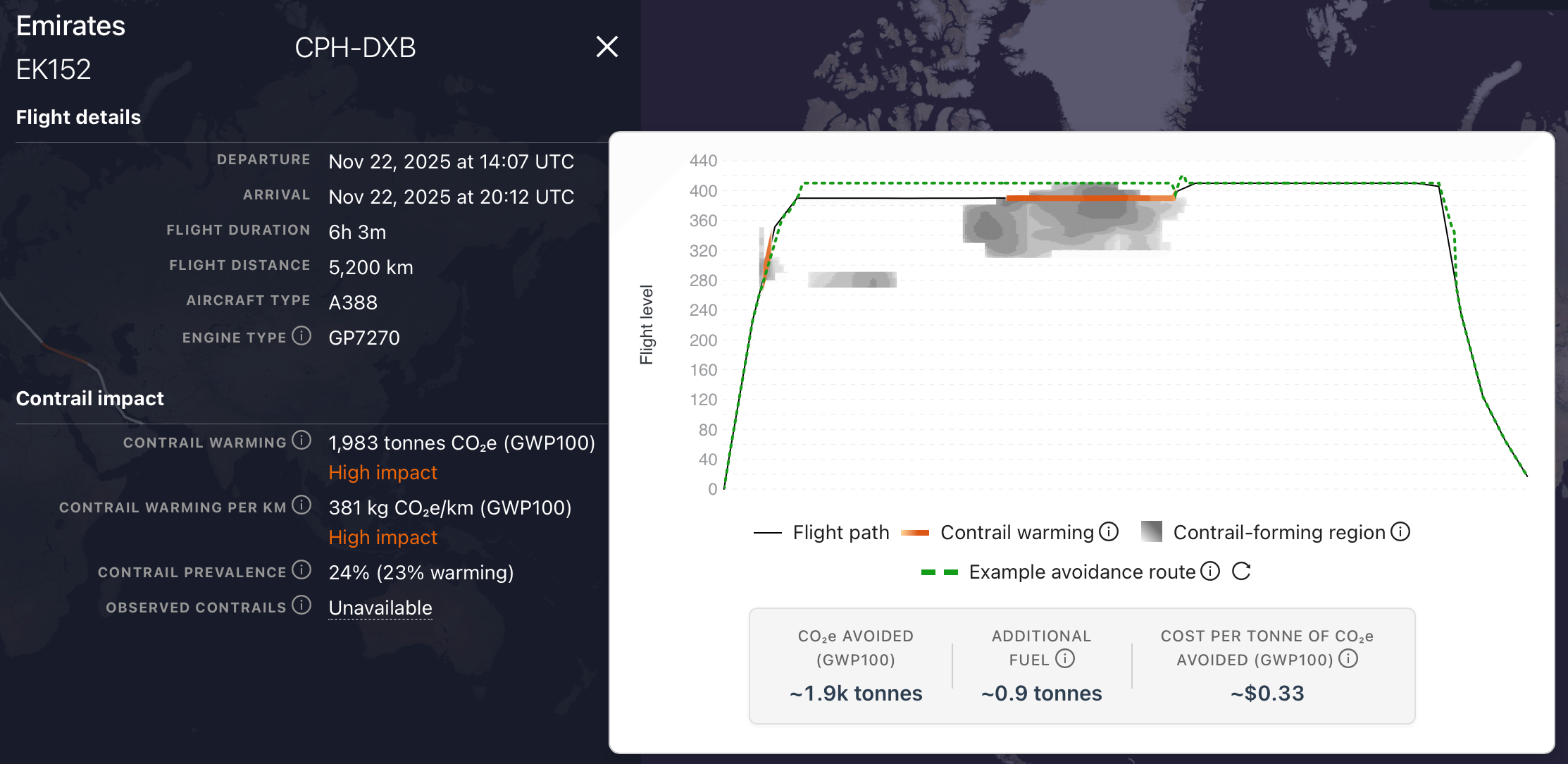
Contrails.org just launched the Impact Explorer (explore.contrails.org), a new tool that makes it easy to look up the climate impact of commercial flights going back to 2024 (and eventually to 2019).
The idea is to present a dataset based on the best available estimates of per-flight contrail impacts. Airlines can request access to dive deep into their own data, studying high-impact routes, individual flights that produce outsized contrail warming, differences between summer and winter, etc.
Non-airline users can study the big picture: intra-EU flights versus all EU flights, contrail warming month-by-month, impact per airport/country/continent, but also the flights that produce more than 2000 tons of CO2e in contrail warming from a single flight.
For some flights, a basic contrail avoidance simulator is also built in, giving a first sense of how rerouting a given flight might have avoided warming.
Still, for frequent flyers or companies wanting to estimate the total climate impact of their flights (including CO₂, contrails, and other non-CO2 impacts), it is very difficult to do so. In the future, it would be great to have a tool where anyone can upload their travel itineraries and get the best available estimate of the total climate impact - everything included. The Impact Explorer is a big step in the right direction.
To new Blue Lines followers: Welcome.
In 2025, we added 33% more subscribers. It is always a pleasure to have more people interested in the progress of contrail avoidance – the most promising solution to lower aviation’s climate impact and potentially one of the fastest ways to reduce global warming overall.
Go to Blue Lines’ website to explore contrails in depth.
See you soon.
Joachim Majholm,
Blue Lines